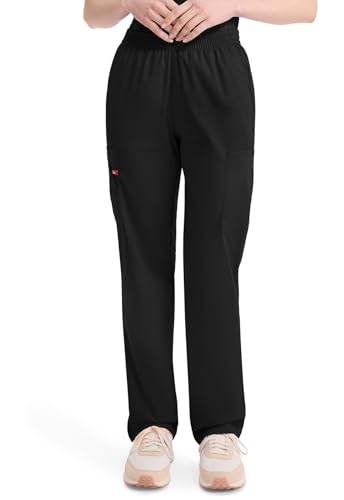
scrubpants
Why the same blend can behave differently
CottonWorks explains that shrinkage depends on fabric construction and manufacturing processes as well as laundering. A change can also show up as puckered seams, a twisted leg, or a different relationship between the main fabric and its trim. That is why two scrub pants with similar fiber labels need not behave identically.
A waistband, ribbed cuff, pocket lining, and pant leg may have different constructions. If only the ankle cuff feels tighter, that is a different problem from a shorter inseam. Look at the whole garment before deciding that the next pair should simply be a larger size.
Record a baseline that you can actually repeat
Lay dry pants flat without pulling the fabric. Measure the inseam from the crotch seam to the bottom of the leg. Record the flat waistband width and the width at a clearly identified point across the seat or thigh. A quick photograph of the tape placement helps you measure the same way later.
After a label-compliant wash and a complete dry, repeat the measurements. For a simple example, a 30-inch inseam becoming 29.5 inches is a half-inch change, about 1.7 percent of the original length. That arithmetic describes your pair; it is not a prediction for another style.
Also try the pants on with your usual work shoes. Fabric can feel different straight from the dryer, and your tape placement can introduce small discrepancies. Measurements and a movement check together are more useful than memory alone.
Use the stated wash and dry settings
FIGS specifies cold washing and either low-heat tumble drying or hanging to dry for FIONx. JAANUU likewise recommends cold washing and low tumble drying or hanging. Those are manufacturer instructions for those products, not a universal setting for every scrub pant.
Read your actual label before choosing the cycle. If a workplace requires a laundering process that the garment does not permit, resolve that mismatch with your employer before buying more pairs. A fabric-care routine is not a substitute for a facility’s procedures.
Do not use a dryer as a tailoring tool
Intentionally applying extra heat does not let you choose where pants become smaller. You might want less room at the waist but end up dissatisfied with the leg length or the way a seam hangs. Exchanging an unworn pair for a better size or having an appropriate alteration assessed gives you a clearer target.
For pants you intend to keep, wash according to the label before a permanent hem. Check the fit again and give the tailor the shoes you expect to wear. If a pair changes unexpectedly despite following its instructions, document the measurements and contact the seller before experimenting with soaking, forceful stretching, or hotter cycles.